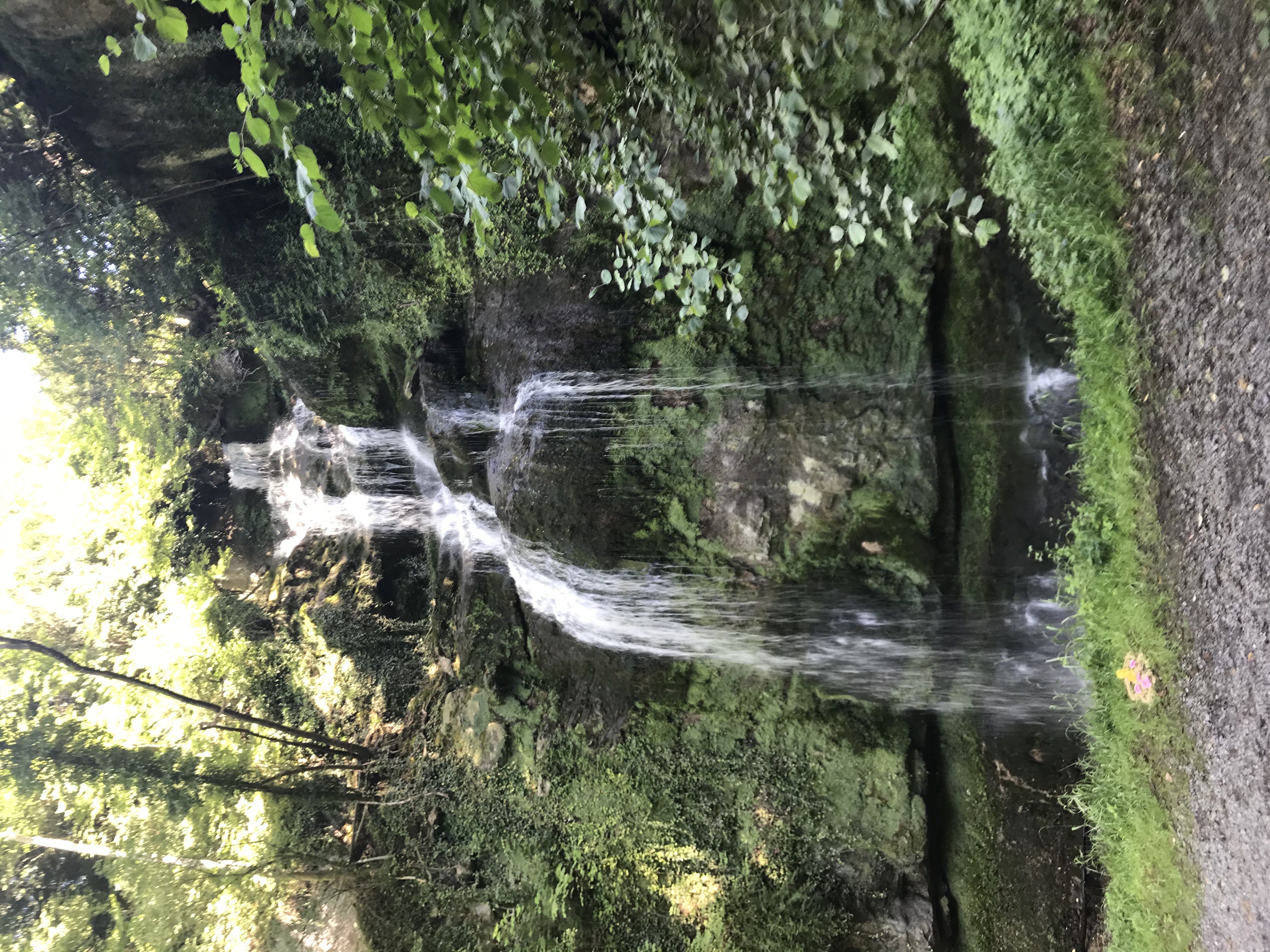
A Giessen is a peculiar type of a waterfall that can be found in the Tösstal in the north-east canton of Zürich in Switzerland. Similar to the Niagra Falls , these waterfalls exist because of a special geological anomaly – The top rock layer is pretty hard compared to the lower ones, which erode more quickly. The most top layer consists of a conglomerate, which is a composition of gravel-sized rocks surrounded by sediments such as sand, silt or clay. The layer below consists of marlstone, a rock that is rich in carbone minerals, silt and clay. 1 2 3 This results in very steep fallings, sometimes several tens of meters. For example, the waterfall of the Giessbach stream falls about twenty meters and thus is the second highest waterfall in the canton of Zürich, just behind the Rheinfall. 4
The word “Giessen” first appeared in 1408 and originates from the old high german word “giezo”, which means flowing water or waterfall. In german today, the word “giessen” means to pour, which also could be an origin to the name of these waterfalls since they pour over an edge, just like water in a drinking glass. 4
There are over 200 Giessen’s in the Tösstal and Rudolf Bolliger even wrote a book about them. 5 6